 How priority programs risk eroding meritocracy in bureaucracy

Penulis

Meritocracy is frequently cited as the backbone of Indonesia’s bureaucratic reform. Yet the true test of meritocracy lies not in official speeches or regulatory texts, but in the state’s treatment of those who have waited longest for recognition.
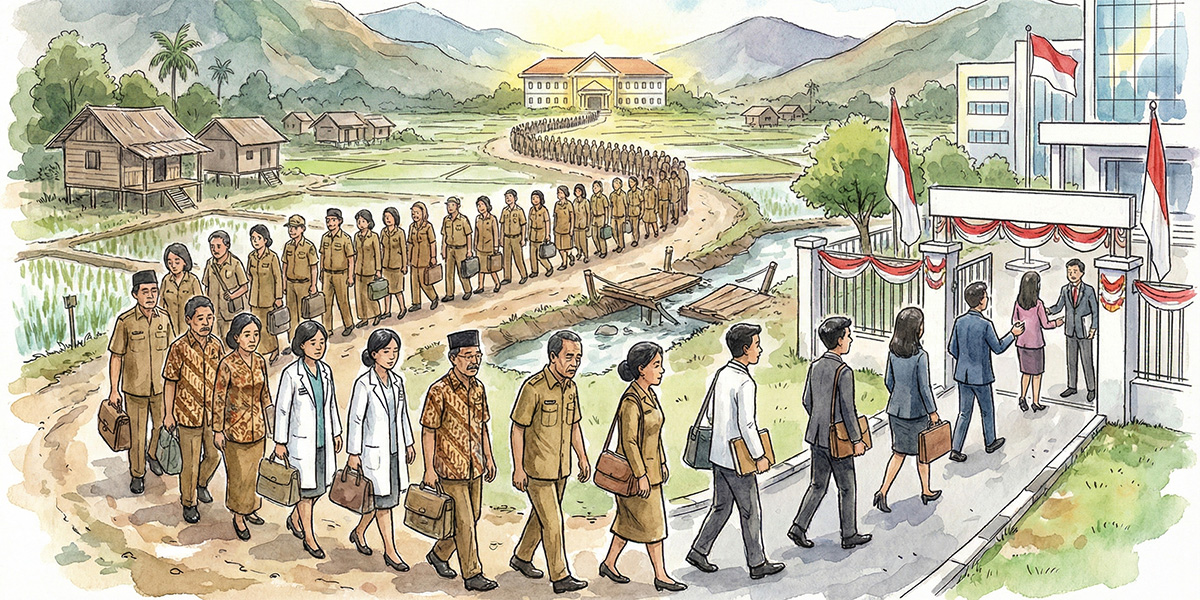
In border regions, far from the center of political authority, non-civil service teachers and health workers spend decades serving the public without secure status or career certainty. They work for modest pay, often without pension guarantees. Their prolonged waiting is not incidental; it reflects a structural condition affecting hundreds of thousands of non-permanent public servants across the archipelago.
Having served within the government, I have seen that resolving such structural injustices is difficult but achievable. During my tenure at the Executive Office of the President (KSP) between 2016 and 2024, my team engaged in rigorous cross-ministerial coordination to address the stalled appointment of 176 civil service candidates in West Seram regency, Maluku, whose status had been unresolved since 2010.