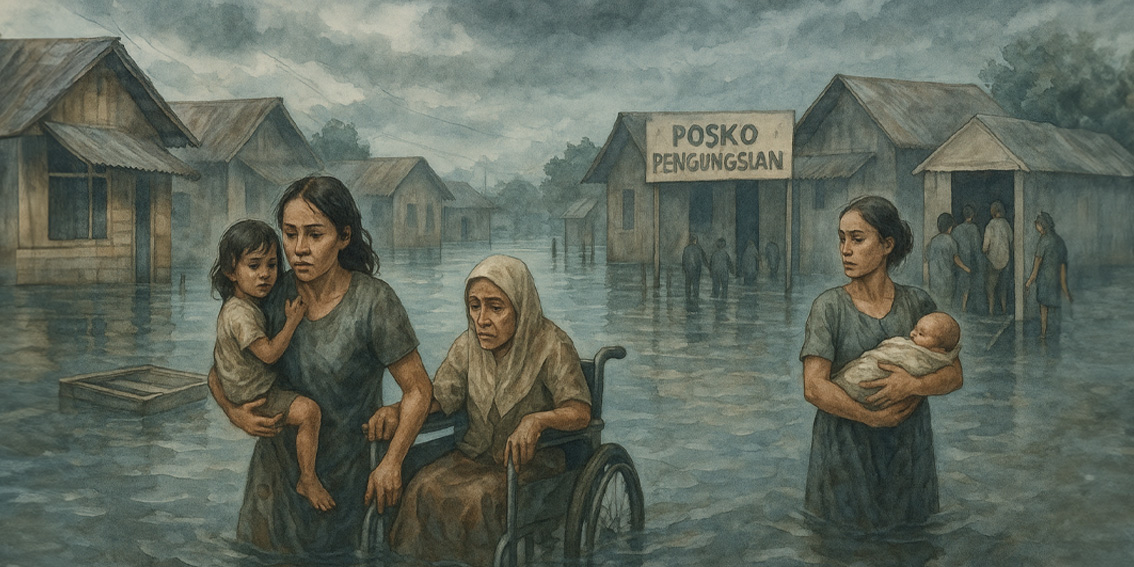
 Disasters, women and the people we choose not to see

Penulis

There is one thing the country does with remarkable consistency, without even trying: We keep failing the same disaster exam.
We have laws, national and local agencies, annual drills and handbooks thicker than Russian realism novels on managing disasters, yet the moment rivers overflow or the ground shifts, we are once again startled by chaotic coordination, sluggish aid and a government too distracted by bureaucratic semantics.
As of Thursday, the media reported that thousands of people across Sumatra have been affected: by displacement, power outages, stalled logistics. Meanwhile, public debate circles obsessively around whether the event qualifies as a “national disaster”, mistaking an administrative checkbox for the crisis itself.
We are a nation perfectly aware of our geological lottery yet perpetually unprepared for the ticket we hold. Disasters unfold like an annual ritual: the flood comes, homes are submerged, the news rolls, jacketed officials appear for photo ops, the cameras leave and so does political memory. The cycle is so entrenched that economists might envy its very predictability.